Every developer eventually reaches a point when their Python setup starts holding them back. Slow performance, broken packages, and security warnings pile up fast. That’s exactly when you need to upgrade Oxzep7 Python and stop letting an outdated environment slow your entire workflow down. Think of it as rebuilding your engine while keeping the car on the road — every layer of your runtime, your dependencies, and your configuration gets touched, tested, and tightened through a proper Python environment upgrade. Waiting never saves time — every delayed update quietly stacks another layer of Python technical debt that your future team will curse you for leaving behind. Whether you’re a beginner or a seasoned developer, a clean Python version migration protects your project, sharpens performance, and keeps your Python security vulnerabilities exposure at zero.
Table of Contents
What Is Oxzep7 Python and Why Should You Upgrade It in 2026?
Oxzep7 Python isn’t your standard out-of-the-box Python install. It works as a Python custom framework — a specialized runtime layer built on top of core Python. Teams use it to manage internal tooling, custom modules, and project-specific configurations. Understanding what it actually does helps you upgrade it correctly without breaking anything downstream. Many developers overlook this distinction and end up creating more problems than they solve.
The year 2025 brings real pressure to modernize. The problem of legacy Python codebases is getting worse for teams that delay addressing them. New libraries drop support for older Python versions constantly. Python version migration isn’t optional anymore — it’s a survival move. Teams that upgrade stay competitive. Teams that don’t accumulate Python technical debt find it nearly impossible to untangle later.
if you want to explore more Python-based frameworks built for specialized use cases, the Dowsstrike2045 Python complete guide breaks down exactly how modern Python environments are structured and deployed.
Key Features That Make Oxzep7 Python Unique
Oxzep7 Python ships with a custom configuration layer that most standard Python versions simply don’t have. It supports internal module loading, environment-specific dependency resolution, and baked-in advanced environment variable configuration.
That’s what makes it powerful — and also what makes upgrading it slightly more involved than a typical Python runtime update.
| Feature | Standard Python | Oxzep7 Python |
| Custom Module Support | ❌ | ✅ |
| Environment Layers | Basic | Advanced |
| Internal Tooling | Limited | Extensive |
| Upgrade Complexity | Low | Moderate |
How Oxzep7 Python Differs From Standard Python Versions
Standard Python follows a clean, predictable release cycle. Oxzep7 Python adds layers on top — think of it as a tailored suit versus off-the-rack clothing. The Python interpreter version underneath may be the same, but the wrapping changes everything. Configuration files, path structures, and containerized Python setup rules all behave differently here. That’s exactly why you need a dedicated upgrade strategy rather than a generic one.
Top Reasons to Upgrade Oxzep7 Python Right Now
Security alone is reason enough. Python unpatched vulnerabilities don’t wait for convenient upgrade windows. Every day you run an outdated version, you’re leaving a door unlocked. A security patch update closes those gaps fast. Beyond that, modern applications demand faster execution, better memory handling, and seamless compatibility with today’s tooling ecosystem. Staying behind means constantly fighting your own stack.
Compatibility drives the second major reason. When you upgrade Oxzep7 Python, you unlock access to newer packages that simply refuse to run on older versions. Python third-party integration becomes smoother. Your team spends less time on workarounds and more time building features. The upgrade also reduces Python technical debt — that invisible weight that slows every sprint, every deployment, every onboarding session.
Security Patches and Vulnerability Fixes
Deprecation of cryptographic functions is one of the sneakiest risks in outdated Python environments. Old hashing algorithms and SSL libraries become liabilities overnight. One unpatched Python vulnerability can compromise an entire production pipeline. Upgrading to the latest patches, fixing known exploits, removing deprecated crypto functions, and bringing your system in line with current Python security standards. Don’t wait for a breach to motivate action.
Faster Execution and Memory Optimization
Newer Python versions deliver significant performance improvements. Python memory management improvements alone can noticeably reduce RAM consumption in long-running processes. Think of it like upgrading from a spinning hard drive to an SSD — everything just moves faster. CPU and memory profiling after the upgrade often reveals double-digit performance improvements teams didn’t expect.
Access to Latest Libraries and Frameworks
Modern frameworks like FastAPI, Pydantic v2, and async-first tools require recent versions of Python. Pip upgrade packages won’t help if your core interpreter is too old to run them. A clean Python environment upgrade opens the door to the full modern Python ecosystem. Always check PyPI compatibility before upgrading to confirm your key dependencies will follow you forward.
Pre-Upgrade Checklist: Everything to Do Before You Upgrade Oxzep7 Python
Preparation separates clean upgrades from chaotic ones. Skipping this checklist is like flying blind in a thunderstorm — possible, but reckless. Before you touch a single config file, you need a full Python environment snapshot, a reliable source code backup, and a dependency audit. These three steps alone prevent the majority of upgrade failures teams experience in the real world.
The smartest teams run their upgrade inside a Python staging environment first. Never touch production until staging passes cleanly. Set up your CI/CD pipeline to run Python checks on every change, ensuring validation is automatic. This isn’t overcautious behavior — it’s just how professional teams protect themselves from costly downtime and frustrated users.
How to Audit Your Current Python Environment
Start by capturing everything in your current environment. Run these commands before anything else:
bash
python –version
pip freeze > requirements.txt
pip list
printenv | grep PYTHON
Python dependency freeze gives you a snapshot you can restore from if needed. Document your Python interpreter version, active virtual environments, and any custom PATH entries. Bold everything that looks project-specific — those items need extra attention during the upgrade process. The dependency lock file you generate here becomes your safety net.
Backup Strategies to Protect Your Data
A solid source code backup means more than just pushing to Git. Export your full environment config, snapshot your database if the app connects to one, and save your .env files in a secure location. Python environment rollback only works when you’ve actually captured the state you want to roll back to. Many teams skip this and regret it within hours of a failed upgrade.
| Backup Item | Method | Priority |
| Source Code | Git commit + push | Critical |
| Dependencies | pip freeze > requirements.txt | Critical |
| Config Files | Copy to secure folder | High |
| Database State | Export/snapshot | High |
| Environment Variables | Save .env file | Medium |
Checking Dependency Compatibility Before Upgrade
Run pipdeptree or pip-check to reveal hidden dependency conflicts Python before they surprise you mid-upgrade. Cross-reference your key packages against the target Python LTS version on PyPI. Some packages will need to be upgraded. Others might need replacing entirely. This step adds an hour to your prep time and saves you potentially days of debugging later.
How to Upgrade Oxzep7 Python Step by Step (Beginner-Friendly Guide)
Breaking the upgrade into five clean steps makes the whole thing manageable — even for developers who’ve never done this before. Each step builds on the last. Rush one, and the next one breaks. Take your time, follow the sequence, and you’ll complete the upgrade Oxzep7 Python process without losing your mind or your codebase. Thousands of developers follow this exact pattern every week.
The key mindset here is patience with process. You’re not just running a command — you’re migrating a living system. Use an incremental upgrade strategy when possible. Move one version at a time if the gap is large. Each hop is smaller, testable, and reversible. Virtual environment isolation in Python keeps every step contained and safe from bleeding into your production system.
Step 1 – Check Your Current Oxzep7 Python Version
Always know exactly where you’re starting from. Open your terminal and run:
bash
python3 –version
oxzep7 –version
pip –version
Document the output. This is your Python interpreter version baseline. Note any discrepancies between the system Python and the Oxzep7-specific version. Your legacy Python codebase may be running on a version that’s several releases behind — and that’s fine. Knowing the gap helps you plan the right number of upgrade steps ahead.
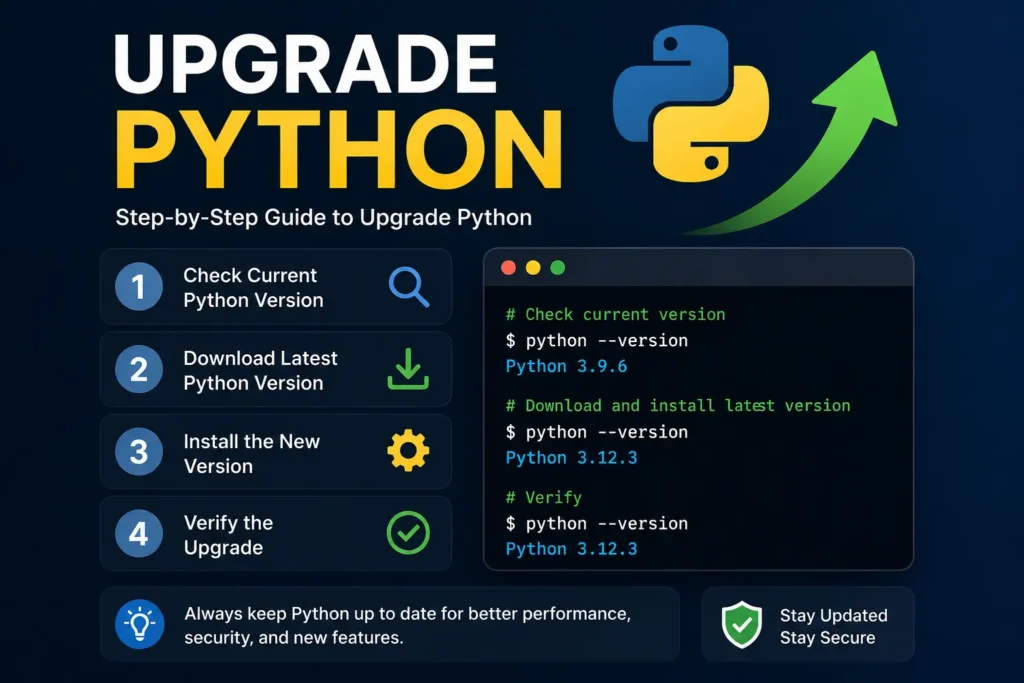
Step 2 – Download and Install the Latest Version
Head to the official Python downloads page and grab the latest stable release compatible with your Oxzep7 configuration. Always verify the checksum after downloading — this confirms file integrity. Install it alongside your current version rather than replacing it immediately. This parallel installation approach protects you. A Python runtime update done this way gives you a fallback if anything goes sideways.
Step 3 – Set Up a Fresh Virtual Environment
A clean virtual environment, Python eliminates legacy interference entirely. Create one specifically for the upgraded version:
bash
python3 -m venv oxzep7_env
source oxzep7_env/bin/activate # Mac/Linux
oxzep7_env\Scripts\activate # Windows
This containerized Python setup approach means old dependencies can’t contaminate your new environment. It’s the single most important step beginners skip — and the one that causes the most post-upgrade headaches. Treat this isolated environment as your clean slate.
Step 4 – Reinstall and Update All Dependencies
With your new environment active, reinstall everything from your frozen requirements file:
bash
pip install -r requirements.txt –upgrade
pip install –upgrade pip setuptools wheel
Pip upgrade packages one batch at a time if you’re seeing conflicts. The dependency lock file you created earlier guides this entire step. Watch for packages that fail silently — they won’t always throw errors immediately. Reinstall Python packages methodically rather than all at once when dealing with complex dependency trees.
Step 5 – Run Tests to Confirm Successful Upgrade
Testing is non-negotiable. Run your full automated test suite before declaring victory:
bash
pytest –tb=short -v
python -W error -c “import your_main_module.”
Green tests mean you’re good to go. Performance benchmark testing here gives you a before/after comparison worth keeping. If tests fail, fix them immediately — don’t push forward with unresolved failures. A passing test suite is the only honest confirmation that your upgrade Oxzep7 Python process actually worked.
Common Errors When You Upgrade Oxzep7 Python and How to Fix Them
Errors during upgrades aren’t failures — they’re just steps in the process. Every experienced developer has hit dependency walls, broken Python scripts, fix moments, and path confusion mid-upgrade. The difference between a stuck developer and a productive one is knowing what each error actually means. Most upgrade errors fall into three predictable categories, and all three have clean, repeatable solutions.
Don’t panic when something breaks. A cool head and a methodical Python environment rollback plan will get you back on solid ground fast. The legacy Python codebase issues that surface during upgrades are actually valuable signals. They’re showing you exactly where your technical debt lives. Fix them now instead of carrying them forward into your next upgrade cycle.
Troubleshooting upgrade errors follows the same logical pattern used across most software systems — much like the approach covered in this detailed guide on software error codes and optimization fixes that applies directly to Python environment debugging
Dependency Conflict Errors and Quick Solutions
Dependency conflicts in Python happen when two packages need different versions of the same dependency. The fix is usually straightforward once you identify the conflict:
| Error Type | Root Cause | Quick Fix |
| Version mismatch | Pinned old version in requirements | Update requirements.txt manually |
| Module not found | Package not reinstalled | Run pip install [package] |
| Incompatible build | Outdated C extension | Upgrade package or find alternative |
| Circular dependency | Poor package design | Use pip-check to trace and isolate |
Pip upgrade packages selectively rather than all at once when conflicts appear. The Python package manager handles most conflicts automatically when you upgrade individual packages one at a time.
Broken Scripts After Upgrade: Causes and Fixes
Deprecated Python syntax is the most common cause of broken scripts after an upgrade. Python 3.10+ changed exception handling syntax. Async patterns shifted between versions. Legacy Python codebase files written years ago often contain print statements, old-style string formatting, and removed modules. Run this command to catch issues early:
bash
python -W error your_script.py
python -m py_compile your_script.py
The Python runtime update process deliberately surfaces these issues. Each warning is a fix waiting to happen. Address deprecated Python syntax systematically — work through files alphabetically or by module importance.
Path and Permission Issues During Installation
PATH conflicts cause more confusion than almost any other upgrade issue. When multiple Python versions coexist, your system might point to the wrong one. Fix it with:
bash
which python3
export PATH=”/usr/local/bin/python3:$PATH”
echo $PATH
Environment variable configuration
errors often hide here. On Windows, check System Properties → Environment Variables carefully. On Linux/Mac, audit your .bashrc or .zshrc for conflicting entries. The upgrade Python interpreter command only helps when your system actually finds the right binary. Best Practices to Upgrade Oxzep7 Python Without Breaking Your Project
The best upgrades are the ones no one notices went wrong. Following established best practices transforms a nerve-wracking event into a routine maintenance task. Python automation in CI/CD pipelines removes most human error from the equation. When every change triggers an automatic test run, you catch problems in seconds rather than hours. Build this safety net before you upgrade — not after something breaks.
Documentation and team alignment matter just as much as technical execution. When your whole team understands the upgrade plan, nobody makes a surprise change that undermines it. Production deployment monitoring after go-live catches the edge cases your tests missed. Set up logging alerts, track error rates, and watch response times closely for the first 48 hours after deploying the upgraded environment.