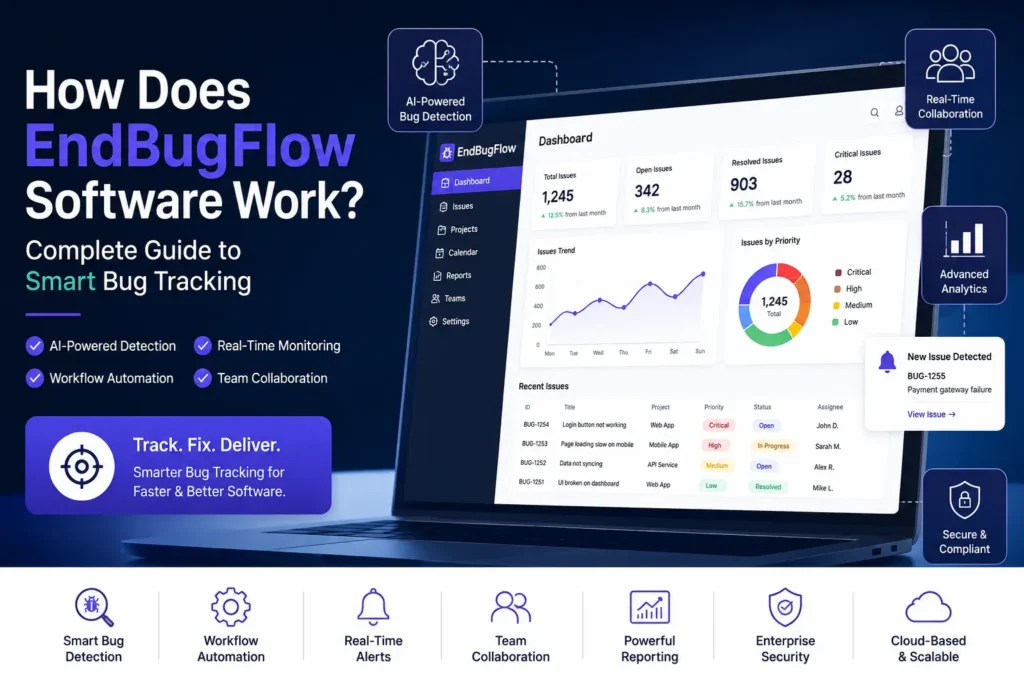
Modern software teams move fast. Even a tiny coding mistake can damage customer trust within minutes. That is why companies now depend on EndBugFlow software to simplify debugging, improve communication, and speed up software delivery. Businesses in the USA, especially, need advanced systems that reduce downtime and improve the customer experience. A slow bug-fixing process feels like driving through heavy fog. Teams lose direction quickly.
Today, developers no longer rely on spreadsheets or endless email chains. Instead, they use a modern bug tracking system with smart automation and live monitoring. The rise of remote work also increased demand for project collaboration software and cloud-based bug tracking solutions. Companies want clear visibility across departments. They also need strong security, faster reporting, and accurate analytics. This guide explains how EndBugFlow software works, covering every major feature in simple English.
Table of Contents
What is EndBugFlow Software?
EndBugFlow is a smart bug-tracking software designed to help teams detect, manage, and resolve software problems quickly. It acts like a digital control tower for developers, testers, and project managers. Instead of scattered reports, the platform centralizes all issues in a single issue management system. Teams can monitor bugs, assign tasks, and track progress without confusion.
The platform supports the full bug lifecycle. From discovery to closure, every step becomes organized and transparent. Many businesses use this software issue tracking platform because it improves communication between departments. The software also strengthens collaboration among the development team by providing every user with real-time updates. As a result, projects stay on schedule while software quality improves steadily.
Understanding the Purpose of EndBugFlow Software
The core purpose of EndBugFlow software is simple. It helps businesses reduce software errors before customers notice them. Every issue enters a structured bug management process that keeps teams focused and accountable. This approach prevents delays and lowers operational risks.
The system also supports software quality assurance by documenting every technical issue. Testers can attach screenshots, logs, and performance data to tickets. Developers then analyze the information faster. This creates a smooth defect resolution workflow that saves time and improves release quality.
Why Modern Businesses Need Smart Bug Tracking Systems
Software applications now power banking, healthcare, retail, education, and entertainment. One unnoticed error can create expensive downtime. As a result, companies invest heavily in enterprise bug-tracking and real-time bug-monitoring tools.
Businesses also require faster reporting and stronger visibility. A smart ticket management system helps leaders understand where problems occur most often. Meanwhile, automation reduces repetitive work. Teams become more productive without feeling overwhelmed by endless manual tracking.
EndBugFlow Software vs Traditional Bug Tracking Methods
| Feature | Traditional Tracking | EndBugFlow Software |
| Issue Reporting | Manual | Automated |
| Team Collaboration | Slow | Instant |
| Analytics | Limited | Advanced |
| Monitoring | Reactive | Real-Time |
| Workflow | Fragmented | Centralized |
Traditional methods often create confusion because updates arrive slowly. By contrast, EndBugFlow software automates workflows and enables real-time collaboration, keeping every department in sync. This modern system behaves like an air traffic controller for software teams.
How Does EndBugFlow Software Work?
Understanding how EndBugFlow software works begins with issue detection. The software continuously monitors applications using automated issue detection tools. Once a problem appears, the system automatically creates a ticket and assigns priority levels. Teams then receive alerts immediately.
After the issue enters the system, managers use intelligent issue assignment to distribute work efficiently. Developers receive technical details while QA teams validate fixes later. This structured software development workflow reduces confusion and improves productivity across departments.
Step-by-Step EndBugFlow Workflow Process
The workflow starts with software issue reporting. A developer, customer, or automated scanner identifies a problem. The platform then categorizes the issue based on urgency and impact. Critical bugs move faster through the pipeline.
Next comes investigation and resolution. Teams collaborate using comments, status updates, and file-sharing tools. Once fixed, the ticket enters testing before closure. This organized automated debugging workflow ensures nothing falls through the cracks.
How Bugs Are Reported, Assigned, and Resolved
Bug reporting becomes much easier with centralized bug tracking. Users submit detailed reports containing screenshots, logs, and replication steps. The software then uses an issue prioritization system to automatically rank issues by severity.
After the assignment, developers investigate the root causes. QA teams later verify the solution using structured testing methods. This coordinated QA and testing workflow improves stability while reducing the frequency of repeat errors.
Real-Time Collaboration Inside EndBugFlow Software
Modern development requires strong communication. That is why EndBugFlow software includes developer collaboration tools and instant messaging features. Team members can discuss issues directly inside tickets.
Core Features of EndBugFlow Software
One major advantage of EndBugFlow software is its rich feature set. The platform combines workflow analytics software, automation, monitoring, and reporting into one environment. Businesses avoid juggling multiple disconnected systems.
Another standout feature is flexibility. Teams can customize workflows based on project size or industry requirements. Whether managing small mobile apps or enterprise platforms, the software adapts easily.
AI-Powered Bug Detection Tools
Artificial intelligence now plays a huge role in debugging. AI-powered debugging tools identify unusual patterns before failures grow worse. This predictive approach saves companies money and protects customer experience.
The software also improves application performance tracking by analyzing crash reports and behavior trends. Teams gain faster insight into hidden problems that manual reviews might miss.
Smart Issue Prioritization and Categorization
Not every software issue deserves equal attention. The built-in issue-resolution system categorizes bugs by business impact. Critical payment failures receive immediate attention while minor cosmetic issues wait longer.
This smart prioritization improves efficiency across large teams. Developers focus on high-value fixes instead of wasting time on low-risk tasks.
Custom Dashboards and Reporting Features
Every business needs visibility. The platform includes an advanced analytics and reporting dashboard that tracks resolution times, workloads, and system stability. Managers gain deeper operational insight instantly.
These dashboards also support customization of workflow reporting dashboards. Leaders can view trends by department, product, or development stage.
Team Communication and Collaboration Tools
Strong communication keeps projects alive. Integrated real-time collaboration features allow developers and testers to exchange updates quickly. Teams solve problems faster because information stays centralized.
Automated Bug Detection and Issue Tracking
Automation dramatically changes how teams handle software problems. Instead of waiting for customer complaints, EndBugFlow software uses real-time bug monitoring to proactively identify issues. Early detection prevents small problems from becoming disasters.
The system also improves the accuracy of software error tracking. Every detected issue receives timestamps, severity ratings, and activity logs automatically. This detailed tracking helps developers investigate problems faster.
How Automated Bug Tracking Improves Productivity
Automation removes repetitive tasks from daily workflows. Teams spend less time organizing tickets and more time building better software. This increases efficiency across departments.
The platform also strengthens software productivity tools by streamlining notifications and reporting. Faster communication means faster resolutions.
Real-Time Error Monitoring and Notifications
The monitoring engine works continuously. Once a system detects unusual behavior, alerts reach developers immediately. This quick response minimizes downtime significantly.
Because of instant notifications, businesses improve customer satisfaction. Users experience fewer interruptions and more reliable applications.
Managing High-Volume Software Issues Efficiently
Large organizations often manage thousands of tickets weekly. A scalable bug tracking solution helps teams organize this workload without chaos.
Workflow Automation and Task Management
Modern development teams depend heavily on workflow automation to maintain speed and consistency. Manual task management creates delays because employees spend too much time assigning work, updating statuses, and chasing approvals. EndBugFlow software eliminates these bottlenecks through intelligent scheduling and automated routing. The system behaves like a railway network operator, keeping every train moving without collisions.
Automation also strengthens smart workflow management by reducing human error during repetitive processes. Teams create custom rules for bug escalation, task reassignment, and deadline reminders. This approach keeps projects organized while improving accountability across departments. Businesses gain smoother operations without adding extra management layers.Many businesses also combine advanced software workflow systems with automation platforms to improve debugging efficiency and development speed
Automating Repetitive Development Tasks
Developers often lose hours performing repetitive actions. Task assignment automation reduces that burden by automatically distributing tickets based on expertise, availability, and priority. Teams stay productive because workloads remain balanced.
The platform also simplifies cloud workflow automation for remote teams. Updates synchronize instantly across locations. Employees work from anywhere without losing visibility into project progress.
Task Assignment and Status Tracking
Every project requires structure. Managers use the built-in software workflow platform to track assignments, deadlines, and ticket progress in real time. Clear visibility prevents confusion during busy development cycles.
The software also improves transparency through status indicators and live notifications. Team members always know which issues require immediate attention.
Workflow Customization for Different Teams
Different businesses follow different workflows. A startup may prefer lightweight processes while enterprises require multiple approval stages. EndBugFlow software supports both environments easily.
How EndBugFlow Supports Agile and DevOps Teams
Agile development depends on speed, adaptability, and constant feedback. EndBugFlow software supports modern teams with advanced Agile bug-tracking capabilities that simplify sprint management and issue resolution. Developers can monitor tasks, prioritize fixes, and deploy updates rapidly without losing control.
The platform also strengthens every DevOps workflow by integrating development and operations into one connected process. Teams gain faster delivery cycles, stronger visibility, and improved communication. Continuous feedback loops help organizations release software confidently.
Agile Sprint Planning and Bug Resolution
Sprint planning becomes smoother with centralized tracking. Teams can easily group bugs into milestones and monitor completion rates. This organized process improves planning accuracy during busy releases.
Developers also benefit from faster bug tracking, as each issue includes detailed logs and test information.
CI/CD Pipeline Integration Features
Continuous delivery pipelines require stability. The software supports CI/CD integration by directly connecting to deployment systems and testing environments. Developers can monitor builds without repeatedly switching tools.
This integration reduces release risks while improving deployment consistency. Teams fix errors before they reach production systems.
Faster Software Releases Through Automation
Automation accelerates every stage of development. Testing, assignment, and monitoring processes happen automatically inside the platform. Teams release updates faster while maintaining software quality.
Integration Capabilities with Development Tools
Modern development environments rely on dozens of tools working together. EndBugFlow software simplifies this complexity through powerful API integrations and compatibility with major development platforms. Teams connect repositories, messaging apps, and monitoring systems within a single environment.
These integrations strengthen integrated development tools by creating smoother workflows across departments. Developers avoid wasting time switching between disconnected applications.
GitHub, GitLab, and Bitbucket Integrations
Source control integration improves traceability during debugging. Developers can connect tickets directly to commits, branches, and pull requests. This creates better visibility during investigations.
The platform also simplifies collaboration by permanently linking code changes to issue histories.
Slack and Microsoft Teams Connectivity
Communication drives successful projects. Integration with collaboration apps allows teams to receive notifications instantly. Developers discuss fixes without leaving their communication channels.
This connected environment improves response speed during critical outages and emergency releases.
API Access and Third-Party Tool Compatibility
Businesses often use specialized tools for monitoring or analytics. Flexible APIs allow organizations to connect external systems with ease.
Security, Access Control, and Compliance Features
Cybersecurity threats continue to rise every year. That is why businesses prioritize strong security and compliance tools when selecting debugging platforms. EndBugFlow software protects sensitive information through encryption, role-based permissions, and secure authentication systems.
The software also supports regulatory requirements in industries such as healthcare and finance. Detailed audit logs help businesses track user actions and maintain accountability during compliance reviews.
Role-Based Access Management
This layered security model reduces insider risks while protecting confidential development assets.
Data Encryption and Cloud Security Standards
Cloud security remains essential for remote organizations. The platform uses advanced encryption protocols to protect data during storage and transmission.
These protections strengthen trust between businesses and customers by reducing exposure to cyber threats.
Compliance Monitoring and Audit Tracking
Audit tracking provides clear visibility into system activity. Managers can review changes, approvals, and user actions at any time.
Performance Monitoring, Analytics, and Reporting
Strong analytics help businesses deeply understand software performance. EndBugFlow software includes advanced performance-monitoring tools that continuously track crash frequency, resolution times, and workload distribution.
Managers also benefit from detailed reporting features. These insights support smarter planning decisions and help teams improve operational efficiency over time.
Measuring Team Productivity and Bug Resolution Speed
Performance metrics clearly reveal workflow strengths and weaknesses. Managers track how quickly developers resolve issues and complete assignments.
This visibility improves workflow optimization while helping organizations allocate resources more effectively.
Advanced Analytics Dashboards
Dashboards transform complex data into understandable visuals. Teams monitor project status, bug trends, and system health from one interface.
The reporting system also supports long-term planning by identifying recurring technical problems.
Predictive Reporting and Software Insights
Predictive analytics help businesses prepare for future risks. Artificial intelligence analyzes patterns to forecast possible failures before they occur.
Benefits of EndBugFlow for Developers, QA Teams, and Managers
Every department benefits differently from EndBugFlow software. Developers gain faster debugging tools while testers improve validation accuracy. Managers receive deeper visibility into project progress and operational efficiency.
The platform also improves communication between technical and non-technical teams. Clear reporting reduces misunderstandings and speeds up decision-making processes.
Benefits for Software Developers
Developers save time through centralized tracking and automated alerts. Faster access to logs and history greatly improves troubleshooting efficiency.
The platform also reduces repetitive administrative work, allowing programmers to focus on coding.
Advantages for QA Testing Teams
Testing teams gain stronger visibility into defects and release quality. Structured validation workflows improve testing consistency during large projects.
The software also simplifies collaboration between testers and developers during critical fixes.
Project Management and Team Coordination Benefits
Managers monitor workloads, deadlines, and priorities from one dashboard. This improves planning accuracy and reduces operational confusion.
Common Challenges and Best Practices
Even advanced systems require proper implementation. Some teams struggle initially because they migrate too quickly without properly training employees. Poor workflow planning can also temporarily reduce efficiency.
However, businesses overcome these challenges through structured onboarding and gradual adoption strategies. Strong leadership support also improves long-term success rates.
Common Implementation Problems Businesses Face
Organizations sometimes import outdated workflows into modern platforms. This creates unnecessary complexity during daily operations.
Another challenge involves inconsistent reporting practices between departments. Standardization solves this issue effectively.
Best Practices for Successful EndBugFlow Adoption
Successful teams create clear reporting guidelines and training sessions before deployment. This preparation improves user confidence and reduces onboarding delays.
Managers should also review workflows regularly to remove inefficiencies over time.
Tips to Improve Team Collaboration and Efficiency
Consistent communication remains essential for productive collaboration. Teams should update tickets frequently and document resolutions carefully.
Shared accountability also improves transparency and reduces duplicated effort across departments.
The Future of AI-Powered Bug Tracking Software
Artificial intelligence continues to rapidly reshape software development. Future debugging systems will become more predictive, autonomous, and context-aware. EndBugFlow software already demonstrates how automation can dramatically reduce manual workloads.
Businesses adopting AI-driven tools today gain a competitive advantage tomorrow. Faster issue detection and smarter reporting significantly improve the customer experience.
Machine Learning in Bug Prediction
Machine learning algorithms analyze historical patterns to identify risks early. These systems predict failures before users encounter visible issues.
Predictive technology also improves operational stability across large-scale enterprise applications.
Cloud-Based Development and Automation Trends
Cloud infrastructure continues expanding across industries. Remote teams need secure platforms that support instant collaboration and scalable performance.
Automation will remain central to modern development strategies moving forward.
The Future of Smart Software Monitoring Tools
Future monitoring tools will become increasingly autonomous. Systems may eventually resolve certain bugs automatically without human intervention.
This evolution will transform debugging from reactive maintenance into proactive prevention.
Frequently Asked Questions About EndBugFlow Software
How does EndBugFlow software work for remote teams?
Remote teams use shared dashboards, instant notifications, and cloud synchronization to collaborate effectively from different locations. The platform centralizes communication and issue management in a single workspace.
Is EndBugFlow suitable for small businesses?
Yes. Small businesses benefit from automation, lower operational costs, and improved organization without requiring massive IT departments.
Can EndBugFlow integrate with existing development tools?
The software supports multiple integrations, including repositories, communication apps, and monitoring systems, through flexible APIs.
What makes EndBugFlow software different from competitors?
Its automation, AI-driven analytics, scalability, and customization features deliver greater efficiency than traditional tracking systems.
Does EndBugFlow support enterprise-level security?
Yes. The platform includes encryption, role-based permissions, compliance tracking, and secure cloud infrastructure to protect enterprises.
Final Thoughts
Modern software development demands speed, precision, and strong collaboration. EndBugFlow software combines automation, analytics, and intelligent monitoring into one powerful environment. Businesses improve productivity while reducing costly technical failures.